In 2025, home design isn’t just about looking good — it’s about feeling good, living smart, and aligning with personal values. As more people spend time at home, the way we decorate and furnish our spaces reflects deeper aspirations: wellness, sustainability, tech integration, and individuality. From cozy organic-modern sanctuaries to futuristic Y3K aesthetics, here’s a deep dive into the home fashion trends defining this year — and how you can bring them into your own space in style.
1. Organic Modern: Luxurious Simplicity Meets Nature
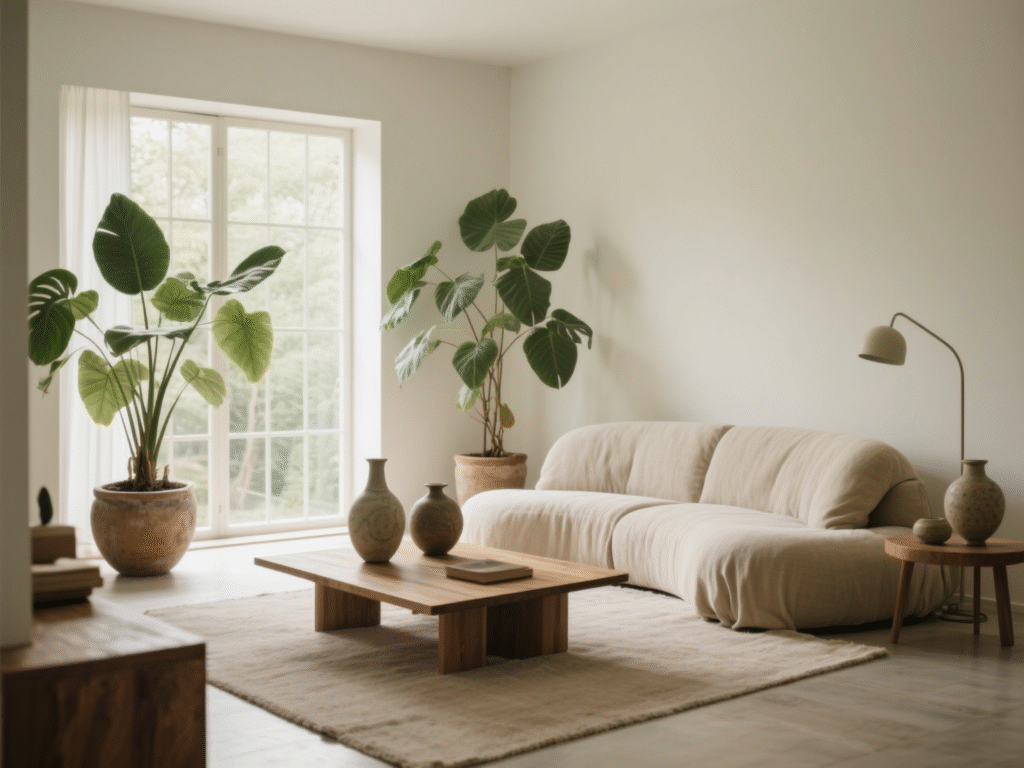
One of the most widely discussed trends in 2025 is organic modern design — a style that marries minimalism with natural elements. Think serene neutral palettes (beige, sage, soft white), gentle curves in furniture, and materials like wood, linen, stone, and ceramic. Homes and Gardens+1
This isn’t just about aesthetics. Organic modern interiors are grounded in sustainability: designers are using reclaimed wood, low-VOC paints, and ethically sourced textiles to reduce environmental impact. linkedin.com+1
How to try it:
Choose a curved sofa or an arched mirror.
Add natural materials like a linen throw or a stone vase.
Include a few potted plants or a small indoor garden to complete the biophilic feel.
2. Biophilic Design & Wellness Spaces
2025 is also the year of bringing the outdoors in. Biophilic design, which connects your home to nature, is seeing a major resurgence. Expect to see living green walls, abundant houseplants, natural textures, and even water features in interior design. sainsinteriors.com
At the same time, wellness is now a core part of the home. According to Elle Decor, many homeowners are carving out dedicated spaces for self-care: mini meditation nooks, cozy reading corners, or even spa-like bathrooms. ELLE Decor Designers are also incorporating smart air purifiers and mood lighting to make these wellness zones more functional and soothing. Housing
How to try it:
Use tall windows or mirrors to bring in natural light.
Integrate vertical gardens, trailing vines, or sculptural planters for that green touch.
Create a small corner with soft textiles (wool, cotton, linen) and calming tech like a smart diffuser or voice-controlled lighting.
3. Smart Homes, Intelligent Design
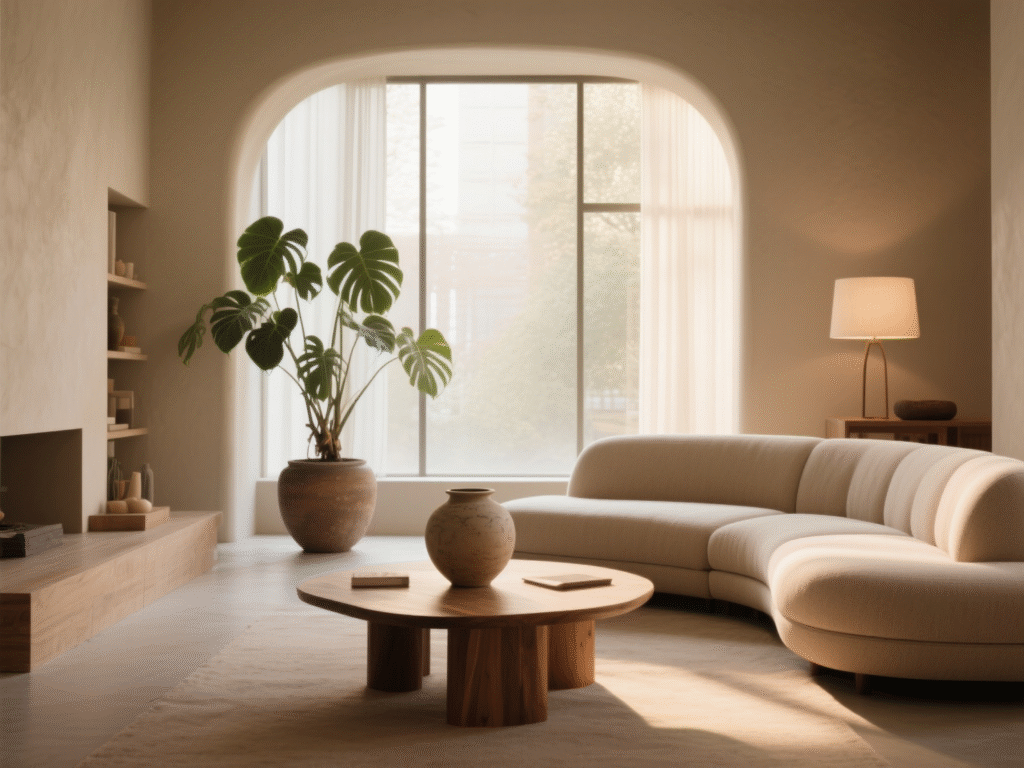
Technology is no longer just an add-on; in 2025, it’s fully woven into the design fabric of our homes. Smart home systems are evolving to be more intuitive and stylish — voice-activated lights, automated blinds, and built-in charging zones are becoming design features, not afterthoughts. Lookboxliving+1
Furniture itself is getting smarter, too. Designers are introducing modular, multifunctional pieces with hidden tech compartments or charging docks for seamless integration. linkedin.com
How to try it:
Invest in smart lighting that syncs with your daily rhythm.
Look for furniture (like desks or couches) with built-in USB ports or wireless charging pads.
Use voice-enabled assistants or smart displays to control your space elegantly.
4. Bold Color & Material Drenching
While neutral tones remain beloved for their tranquility, 2025 is seeing a push towards expressive color. Designers are leaning into bold, jewel-like hues such as deep emerald, rich aubergine, and sapphire blue. Anne Haas Design
One particularly striking trend: material drenching. This means saturating a space with a single color across different textures — walls, furniture, accessories — to create harmony and visual impact. centex.com
Metallic finishes are also having a moment, with brushed brass, polished chrome, and matte metals used in lighting, hardware, and decor elements. centex.com
How to try it:
Choose one bold material or hue and repeat it in décor: maybe a jewel-toned velvet cushion, a lacquered cabinet, or a metallic lamp.
Combine this with natural elements (like wood or linen) to balance richness with warmth.
Use curved furniture or sculptural lighting to add softness and movement.
5. Grandmacore, Retro Revival & Personalized Spaces
2025 isn’t just about the future — it’s also about the past. The grandmacore aesthetic, with its cozy florals, vintage patterns, and sentimental charm, is making a nostalgic comeback. thescottishsun.co.uk+1 Designers are fusing this with modern functionality, bringing together handcrafted heirloom pieces, cozy textiles, and curated memories. Jacksonville Journal-Courier
At the same time, personalization is key. Rather than cookie-cutter furniture, more people are choosing bespoke pieces, custom artwork, and meaningful items that reflect their own story. The Goodhart Group
How to try it:
Include vintage finds — maybe a floral armchair, an antique dresser, or handcrafted pottery.
Commission or DIY custom art or textiles that feel personal.
Use layered patterns and textures to make your space feel deeply “you.”
6. Lighting: Sculptural & Statement-Making
Lighting is no longer just functional — it’s one of the strongest style drivers in 2025. Statement fixtures, including oversized pendants, sculptural floor lamps, and lighting as art, are leading the way. centex.com
These fixtures don’t just light a room — they shape its mood. Designers are layering ambient, task, and accent lighting to craft spaces that feel rich and dynamic. brookfieldresidential.com
How to try it:
Consider a dramatic chandelier or sculptural pendant as a centerpiece.
Use a combination of floor, table, and wall lamps to add depth to your lighting.
Go for finishes that reflect other materials in your space — brushed metal, natural stone, or even ceramic.
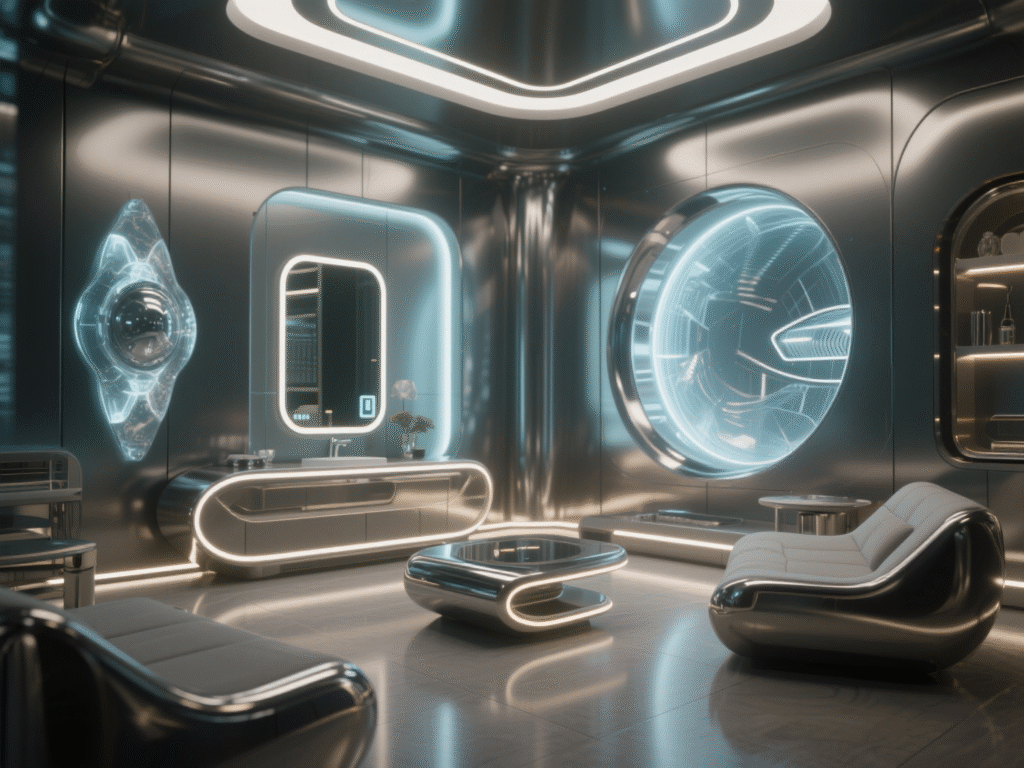
7. Y3K Aesthetic: Futuristic & Metallic
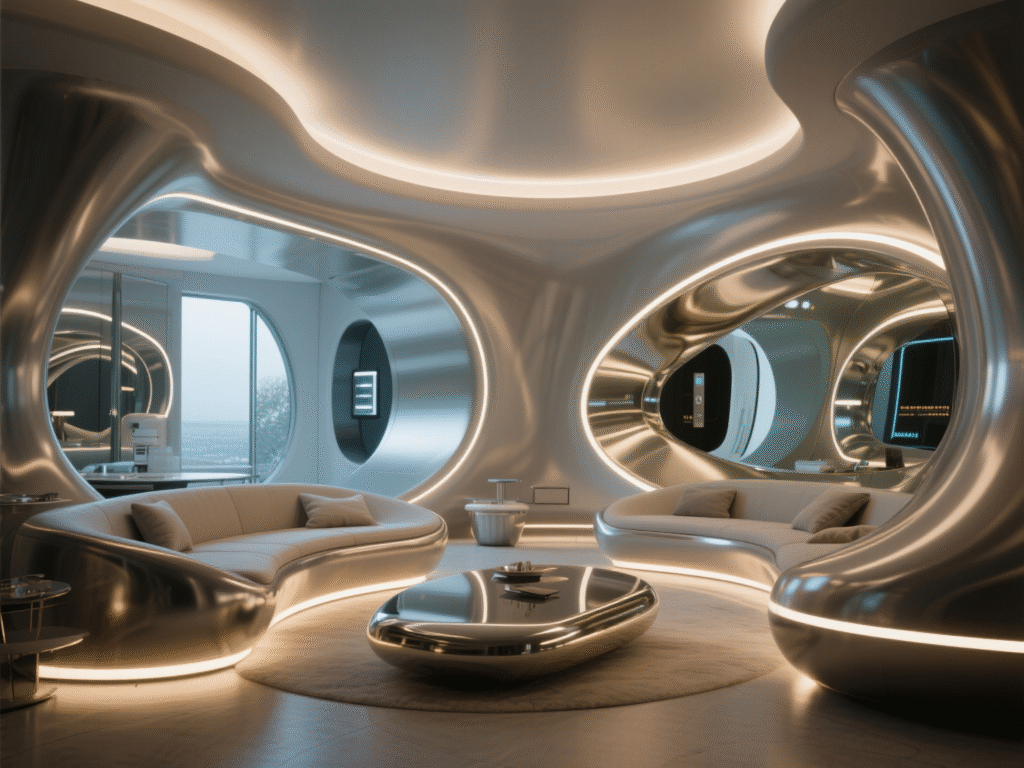
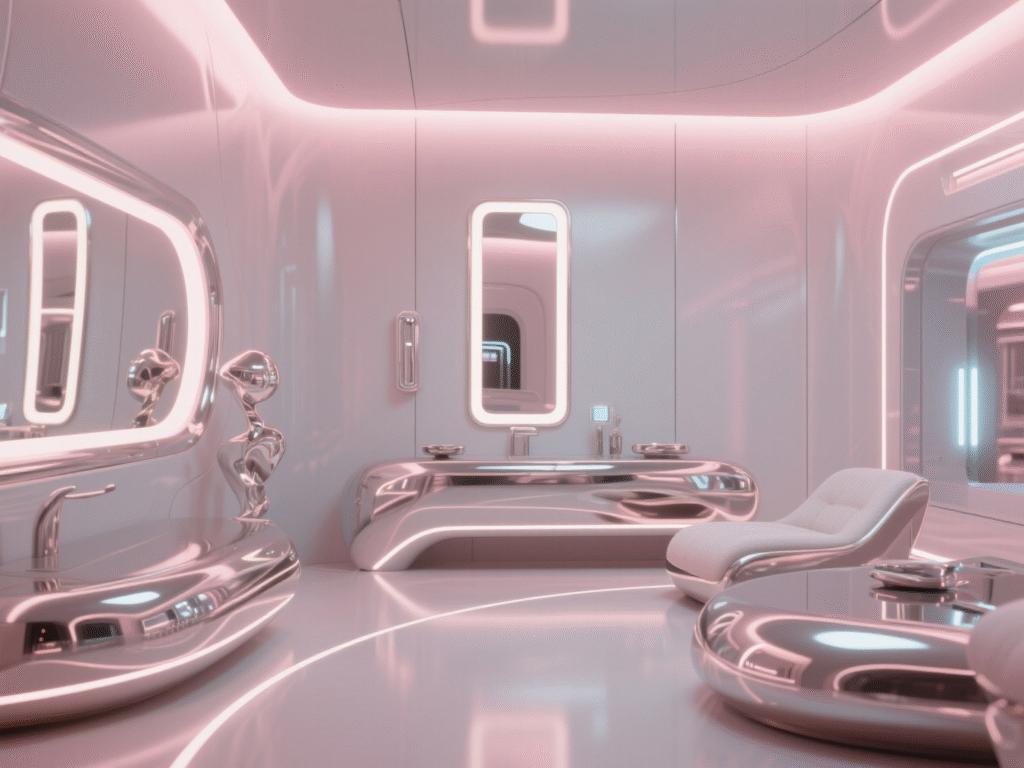
Beyond organic and natural, there’s a bold futuristic movement emerging: the Y3K aesthetic. Drawing from science-fiction and runway trends, this design style blends holographic accents, chrome finishes, sleek minimalism, and high-tech materials. Better Homes & Gardens
This isn’t cold or sterile. Designers are balancing the futuristic edge with soft textures like bouclé, shearling, and alpaca to bring warmth to the high-tech look. Better Homes & Gardens
How to try it:
Integrate metallic or holographic décor — think chrome trays, mirrored surfaces, or abstract sculptures.
Include soft modern furnishings that contrast with the hard edges: a plush chair, a fuzzy rug, or a textured pillow.
Use smart mirrors or tech-forward furniture to lean into the Y3K vibe without sacrificing comfort.
8. Sustainability as a Core
More than a buzzword, sustainability is becoming the foundation of modern home design in 2025. Recycled materials, eco-friendly finishes, and ethical sourcing are no longer optional — they’re essential. newdecortrends.com+1
Designers are also embracing circular design: furniture and decor that can be repaired, reused, or recycled, rather than thrown away. brookfieldresidential.com
How to try it:
Choose furniture made from reclaimed wood or recycled metal.
Opt for low-VOC paints, biodegradable textiles, or sustainable alternatives like cork and bamboo.
Upcycle pieces: re-stain an old dresser, repaint a side table, or enliven vintage chairs.
Bringing It Together: A Home for Today and Tomorrow
The most exciting thing about the home fashion trends of 2025 is their harmony. These are not separate aesthetics but complementary directions: organic shapes meet smart tech; vintage nostalgia meets future-forward shine; personal storytelling meets global responsibility.
Here’s how to pull it all together in your space:
Define your anchor style — Choose one or two of the key trends above that resonate most with you.
Layer thoughtfully — Combine natural textures, smart elements, bold color, and custom pieces in a way that feels cohesive.
Prioritize function — Make sure your design choices support your lifestyle, whether that’s wellness, remote work, or family time.
Sustain with intention — Select materials and finishes that reflect your commitment to quality and longevity.
Illuminate with purpose — Use lighting not just as illumination but as a design feature that brings mood and rhythm to your space.
When done right, your home becomes a reflection of who you are — grounded, forward-thinking, and deeply intentional.
Why These Trends Matter
People are spending more time at home, and a space that balances comfort and style supports mental health and productivity.
Sustainability is driving consumer decisions — and designers are rising to meet that demand with materials that are both beautiful and responsible.
Technology is no longer a separate layer: smart design integrates lighting, furniture, and even mirrors, making our homes more efficient and intuitive.
With the rise of personalization, homes are becoming more deeply personal — not just places to live, but places to be.
As we move forward, the home is evolving into a sanctuary — one that reflects our values, supports our wellbeing, and adapts to how we actually live. In 2025, the best homes are not just Instagram-worthy — they’re deeply human.